The Cyclops' Lavishment of Wretched Calamity
Summary #
A historical legend from ancient Cuprum that told of the fall of the kingdom at the hand of an alien organism known as "the Cyclops". The story said that the monster arrived in a meteorite ("the Vile Comet") that poisoned the land. The author(s) referred to the crater as a fountain, which led to the naming of the Nether Fountain. The Cyclops next crawled out of the crater and quickly attacked the human civilizations of Dawn Isle. It was unable to be stopped by conventional weapons, and what magical weapons the Cuprum kingdom had at its disposal were probably nullified by the Nether Fountain's anti-magical influence anyways. The Cyclops was only able to be stopped by foreigners who used a weapon called "the Mandrel" to decapitate it and send its head rolling into the ocean. Unfortunately, the kingdom of Cuprum had suffered so much damage that it would be unable to recover, effectively ending the kingdom's reign.
Somewhere past this point the Cuprum Nomads would form from the survivors of the Calamity. The Calamity doesn't explicitly state it, and neither does any other documentation, but it was assumed that the reigning king of Cuprum and his family all perished during the events.
Part 1 of The Calamity
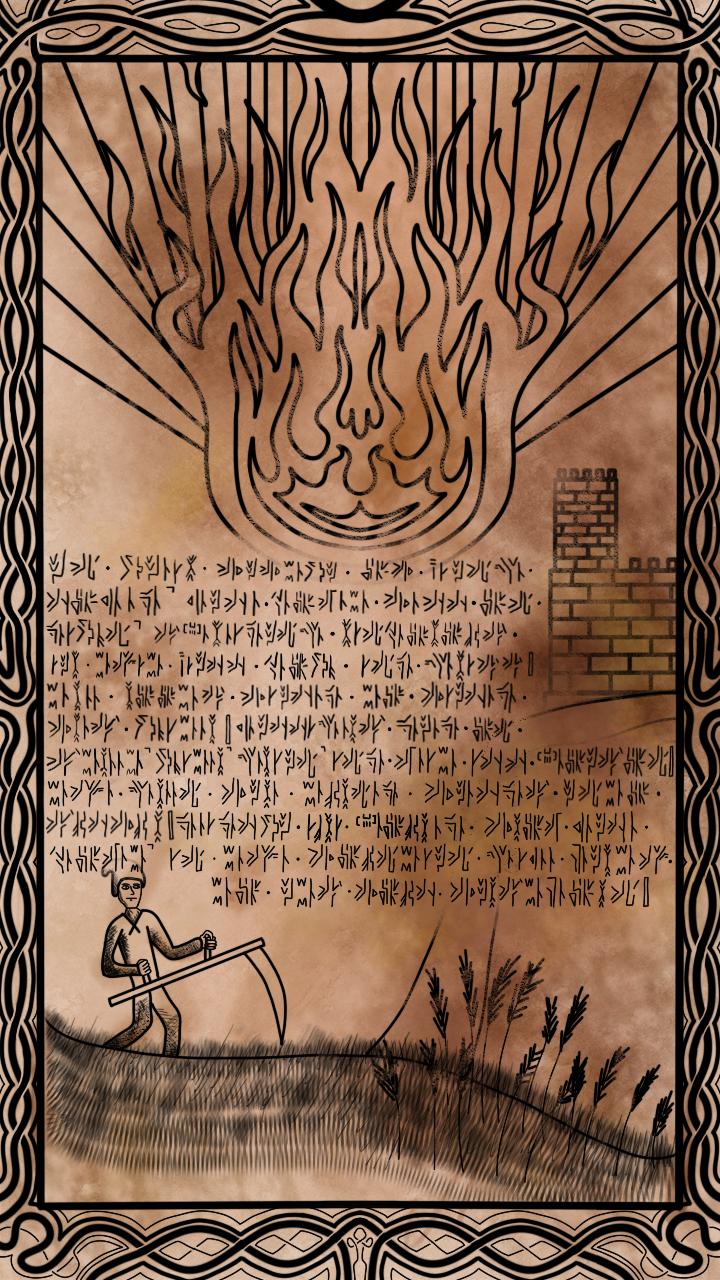 In the fiftieth year of our beloved King, the Vile Comet collapsed upon our lands, spreading a rancorous air that slew both cattle and lawn alike. The trees bent down, their roots lacking in water fit to drink. Those of the villages collapsed in their streets, their wells filled with rot-water, their grains tainted with venomous dust and their beef poisoned with the elixir of death. The viridescent flames of the heavenly curse crept across the lands, slaughtering the lush pastures and replacing them with fields of brimstone and suphur. From the Vile Comet's cradle poured forth the deadly aura, and eventually the Fountain gave birth to its foul firstborn.
Part 2 of The Calamity
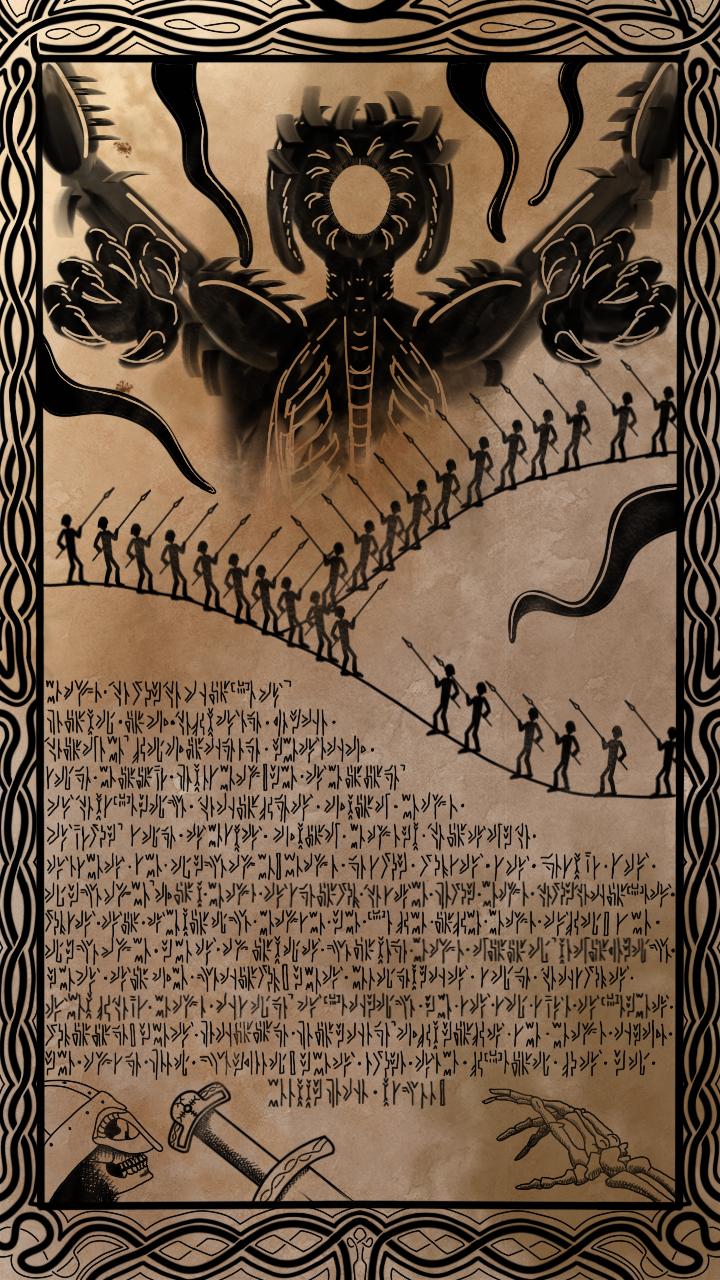 The Cyclops, a cursed monster born of the hellfire of the Vile Comet, unfurled its wretched being and raised its head to breathe in our world's air. As it stood, its head tore down the very clouds from their high positions, and at night its scalp stole away the stars from their cosmic seats. The day was as dark as the night, for the Cyclops' shadow was so mighty that it extinguished the sun. At night, its horns gored the moon, stealing away what little light was blessed to us during the sun's absence. Its tendrils and claws struck the land, splitting it open as an axe divides wood. Its blood boiled in furious rage at the life it had been given, and the Cyclops set upon our people with terrible fury. Its eye consumed all that it gazed upon, leaving only soulless carnage in its wake.
Part 3 of The Calamity
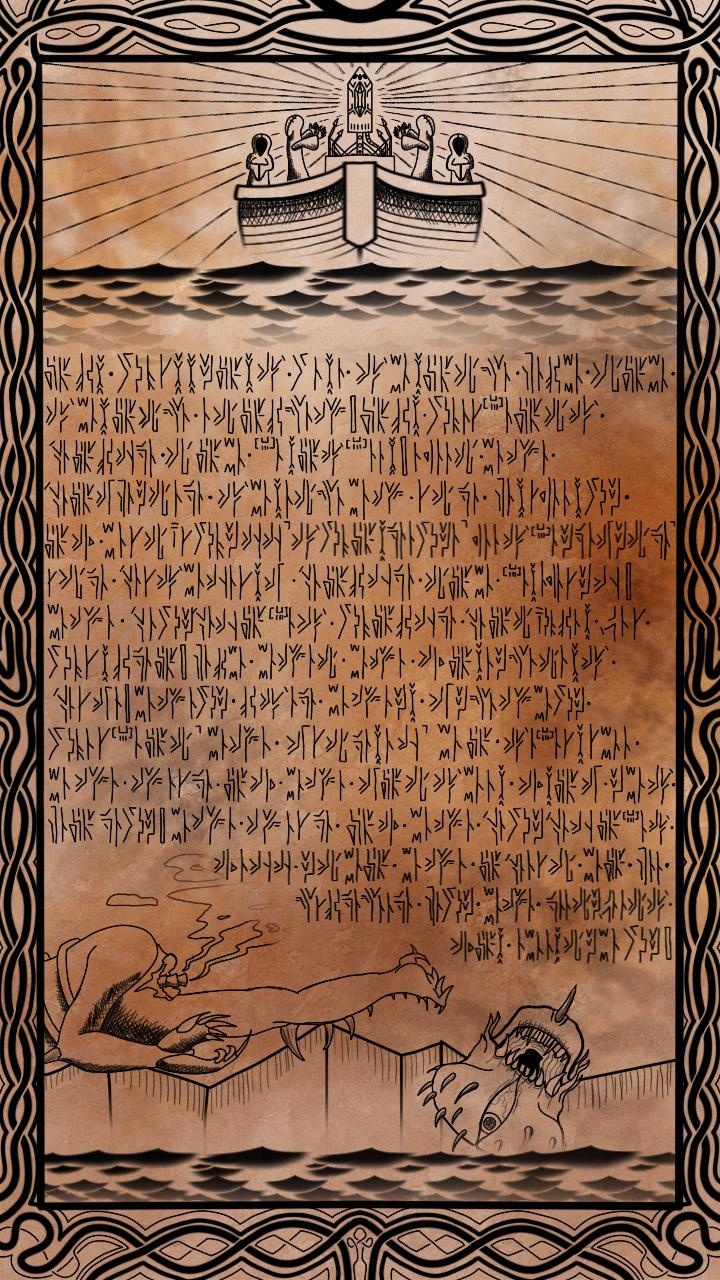 Our bravest warriors formed at the feet of the mighty Cyclops, their wills equally as powerful as the savage being's fists. But their swords and spears faltered, succeeding only in drawing forth a noxious blood that poisoned the minds and bodies of those it baptized. Arrows sought to flee from the Cyclops' flesh; its skin was like fire iron and took 5 men to deliver even an insignificant laceration. Together the Serberker orders united, standing their ground. The mighty Tankwilled, the stoic Swordeyed, the shrewd Hornetminded and the vigilant Castlearmed all stood shoulder to shoulder, their entire beings transfixed upon protecting their King and their people. But alas, Serberker might fell short, and the blood of our greatest warriors pooled into rivers wider and deeper than any other upon Legere. The Cyclops reveled in its victory, tearing our monuments down one by one and bringing ruin to all. The Cyclops was feared to bring the destruction of all the world, but was stopped by those who came from across the waters. They moved quickly, knowing what lay at stake, and together they worked to breathe life into the cyclops-bane. They brought their weapon, the Mandrel to face the Cyclops, and with its potent magick laid waste to the wretched life of the creature. The calamity ended, but not before the beast collapsed upon the surface, its body ravaging the lands once and for all. Its body lay there, head apart from limbs, festering and rotting to seal the old fertile lands away in the past. The Cyclops' head rolled lifelessly into the ocean where the creatures of the deep would judge its sins evermore.
Historical Basis #
The Cyclops' Lavishment of Wretched Calamity (often abbreviated to the Calamity) was a collection of three pages recovered from ancient Cuprum ruins. It was written by Cuprum scholars during the time period following the collapse of the Cuprum Kingdom, and chronicled the arrival, assault and vanquishing of a massive entity known as the Cyclops. Multiple copies existed on other pages in varying states of decay. A large carved stone diorama with higher detail was later discovered, although it's only been partially finished. Undoubtedly its construction was interrupted as the Cuprum Kingdom continued its spiral into oblivion.
The Calamity was often cited as the reason why the Festerplains and The Nether Fountain exists, although post-Demon Wars scholars pondered on whether or not the story is a dramatization with added fantasy elements to try and frame the fall of the Cuprum Kingdom as a(n) (un)natural disaster as opposed to an economic or military catastrophe. The discovery of The Mouth of the Cyclops and its theorized linkage to the Cyclops of legend has helped cement the Calamity as mostly truth. There are still many strange phrases called into question regarding the Cyclops' appearance, and its appearance within the different pages of the Calamity also is not consistent. As a result, two theories arose in academic circles: either the Cyclops mutated during its conquest, or it was so large that the artist(s) could not actually tell what the monster actually looked like (therefore relying on artistic liberties to illustrate it).
Some scholars believed the people referred to as "those who came from across the waters" were members of the Arcane Hand. Of course, this was a highly unlikely theory considering Arcane Hand wouldn't be founded until over a hundred hundred years later. Additionally, the Arcane Hand has expressed its own lack of knowledge but interest in what the true nature of the Mendrel weapon was. The Arcane Hand has attempted to locate remains of it unsuccessfully.
Spread #
The Calamity was a relatively common tale, spread as a scary story around campfires or sometimes twisted into an apologue to scare lessons into children. Treasure hunters who ventured into the Dawn Wastelands have found pages of the Calamity and taken them back to their homelands. Sometimes these pages made their way into libraries or other private collections, and from there they diffused into the populace via word of mouth.
Variations & Mutation #
The "Big Bad Cyclops" is a version of the Calamity told by parents to their children to warn them about various issues. Many different variations exist, but they all follow the same plot: "The King of Cuprum stole something/told a lie/refused help/said a bad word, and as a result the Cyclops destroyed the kingdom".
The Cuprum Nomads also share their own version of the Calamity, but instead of coming from the heavens, they claim that the Cyclops crawled from the earth and that it was defeated by the strength of the Serberkers alone.
In Art #
As mentioned prior, the Calamity was documented on multiple pages of cloth-paper in varying states of decay. The dry and dusty environment of the Dawn Wastelands have helped prevent decomposition of such documentation. The Calamity is also half-carved out of stone in a plaza buried under the dust dunes South of the Nether Fountain. There have been some discussions by eccentric historians to recreate and finish the diorama, but no action was ever taken.
Some ships of Siman were known to bear the visage of a one-eyed monster resembling the Cyclops. It was believed that the monster's own terrifying appearance would protect the ships from the Mouth as they traversed the Cyclopean Ocean. These visages of the Cyclops were especially common on pirate flags.